

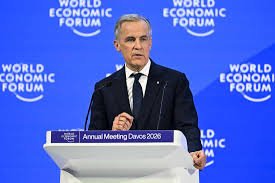
Canadian Prime Minister Mark Carney has announced a multibillion-dollar package of measures aimed at reducing the rising cost of food and other essential goods for low-income Canadians, as households continue to feel pressure from high grocery prices.
On Monday, Carney revealed a five-year increase of 25 percent to the Goods and Services Tax (GST) credit, which will begin this year. As part of the changes, the GST credit will be renamed the Canada Groceries and Essentials Benefit.
According to the prime minister, the expanded benefit will offer meaningful financial relief to more than 12 million Canadians. In addition to the long-term increase, the government will issue a one-time payment this year equivalent to a 50 percent boost for eligible recipients.
“We are introducing new measures to bring down costs and ensure Canadians get the support they need right now,” Carney said.
The initiative is expected to cost the federal government 3.1 billion Canadian dollars in its first year. Annual spending is projected to range between 1.3 billion and 1.8 billion Canadian dollars over the following four years, Carney told reporters, according to Reuters.
Although Canada’s overall inflation rate has slowed to 2.4 percent in December, food prices continue to rise faster than other goods. Tony Stillo, director of Canada Economics at Oxford Economics, said food inflation remains elevated due to a mix of global and domestic pressures, including supply chain disruptions, higher US tariffs linked to the trade war, and the effects of climate change and extreme weather.
To help businesses cope with these challenges, the government will allocate 500 million Canadian dollars from the Strategic Response Fund to help companies manage supply chain costs without passing them on to consumers. In addition, a new 150 million Canadian dollar Food Security Fund will be established under the Regional Tariff Response Initiative to support small and medium-sized businesses and organizations involved in food security.
Carney said the measures reflect the government’s focus on strengthening the economy amid growing global uncertainty. “The global environment is changing rapidly, creating uncertainty for workers and businesses. Our government is concentrating on what we can control—building a stronger economy and making life more affordable for Canadians,” he said.
The announcement comes as Parliament reconvenes after the winter recess and amid increasing pressure from opposition parties to address the cost of living. Canada’s economy has also been affected by trade tensions with the United States, where President Donald Trump has imposed 35 percent tariffs on Canadian goods, along with separate duties on steel, aluminum, and lumber, resulting in job losses.
Over the weekend, Trump further warned that he could introduce a 100 percent tariff on Canada if it moves forward with a trade agreement with China. In response, Carney has been working to reduce Canada’s reliance on the US market—which accounts for nearly 80 percent of Canadian exports—by expanding trade ties with other countries, including China.
