

February 1, 2026
South Sudan’s Kenyan-led Tumaini Initiative has handed over a framework to guide negotiations on a proposed National Consensus Charter, in a renewed effort to break the country’s prolonged political deadlock and pave the way for national elections.
A South Sudanese government delegation visited Nairobi on Friday, where it was issued with the dialogue framework by Kenyan President William Ruto. The document was later shared with key opposition groups, including the Sudan People’s Liberation Movement-in-Opposition (SPLM-IO), the United Peoples’ Alliance (UPA), and the South Sudan Opposition Movements Alliance (SSOMA). It was also circulated to civil society actors, including the South Sudan Council of Churches.
The framework is intended to guide discussions on a charter that would outline a clear pathway toward timely, credible, free, and fair elections through a South Sudanese-led and South Sudanese-owned process. The initiative promotes inclusive participation, equal stakeholder engagement, and a shift away from adversarial and zero-sum negotiations.
Initial agenda items are expected to include cessation of hostilities, stabilisation, civilian protection, and humanitarian access. Longer-term issues—such as permanent constitution-making, transitional justice, and security sector reform—are expected to be addressed by a future elected government.
While recognising the 2018 Revitalised Agreement on the Resolution of the Conflict in South Sudan (R-ARCSS) as the foundation for peace efforts, the initiative seeks to address the current political stalemate and persistent security and economic challenges by drawing lessons from shortcomings in the agreement’s implementation.
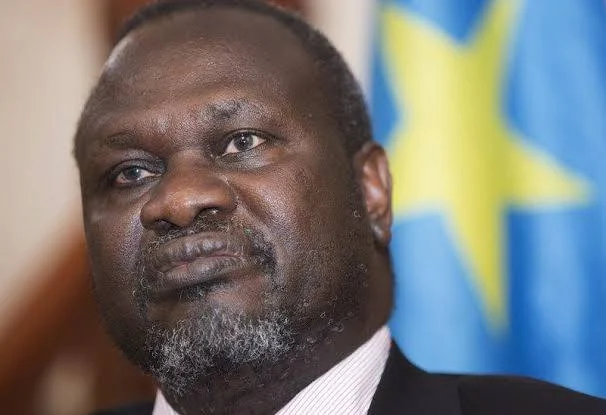
However, the SPLM-IO has not confirmed its participation in the talks scheduled to begin in Nairobi on February 9. The opposition movement has made its participation conditional on the release of First Vice President and SPLM-IO leader Dr. Riek Machar, who remains under house arrest and on trial in Juba.
The group has also rejected the government’s recently formed dialogue committee, arguing that the process lacks inclusivity and cannot produce meaningful outcomes while the SPLM-IO remains excluded and its leader remains detained.
The regional bloc IGAD is expected to serve as steward of the Tumaini Initiative within a regional framework, with support from international partners. Deliberations on the draft National Consensus Charter are expected to conclude within four weeks.
Meanwhile, fighting has intensified in parts of the country, particularly in northern Jonglei State and other areas, between government forces and SPLM-IO fighters loyal to the detained First Vice President. Regional and international peace monitors have warned that South Sudan risks sliding back into full-scale conflict as the 2018 peace agreement continues to weaken.
Background: The Tumaini Initiative
The Tumaini Initiative was launched in Nairobi in December 2023 at the request of President Salva Kiir, with Kenya’s support, to reinvigorate South Sudan’s stalled peace process by engaging both signatories and non-signatories to the 2018 peace agreement.
Initially welcomed as a bold regional intervention, the initiative later faced resistance from Juba, which accused it of undermining the existing peace framework and legitimising armed opposition. The talks were adjourned several times, including for the third time in February 2025, without concrete resolutions, amid deep political mistrust and internal divisions.
The latest framework represents a renewed attempt to revive the initiative at a time of escalating violence and growing fears of a return to full-scale conflict.
