

JUBA | April 29, 2026
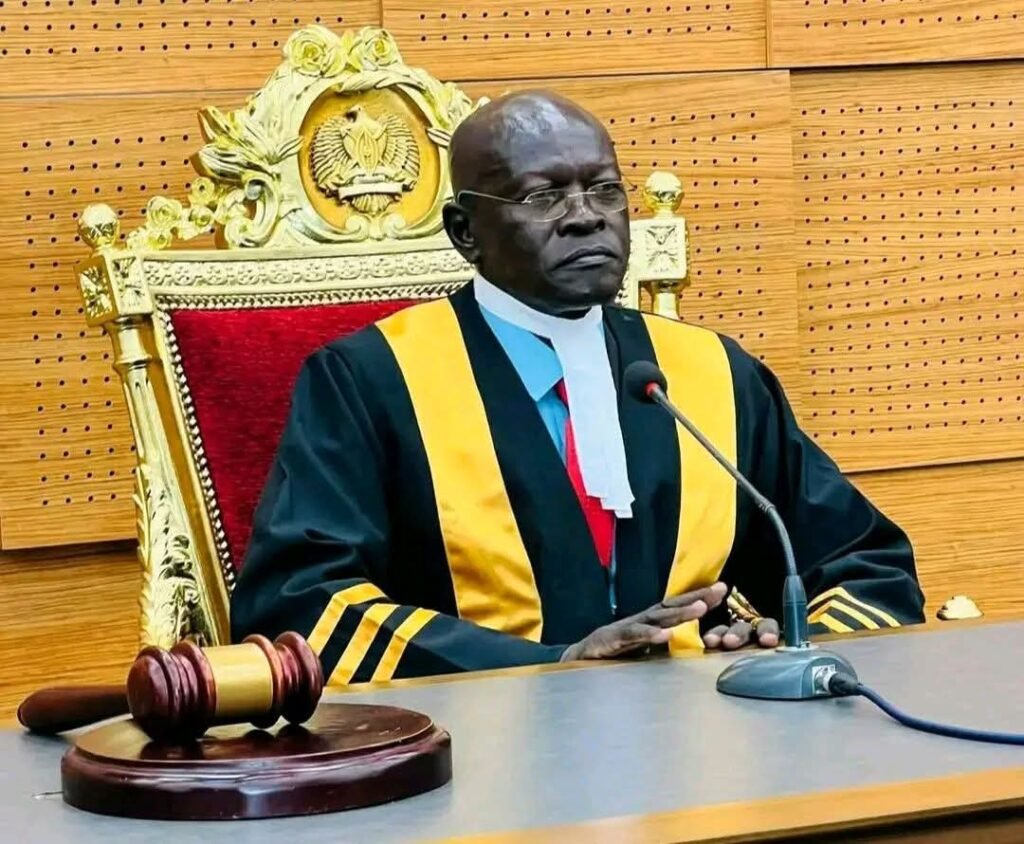
South Sudan’s national legislature on Tuesday unexpectedly postponed a highly anticipated debate on proposed amendments to the country’s 2018 peace agreement, citing unspecified “technical reasons,” according to parliamentary officials.The joint sitting of the Transitional National Legislative Assembly (TNLA) and the Council of States had been scheduled to deliberate on revisions endorsed by the cabinet earlier this month.
The proposed amendments are intended to facilitate national elections planned for December 2026. However, the process has drawn criticism for allegedly bypassing key oversight mechanisms.The changes were approved by the Council of Ministers on April 17 and submitted directly to parliament, sidestepping the Reconstituted Joint Monitoring and Evaluation Commission (RJMEC), which is mandated to oversee implementation of the peace agreement.
Government officials aligned with President Salva Kiir argue that the amendments comply with Article 8.4 of the 2018 revitalized peace deal, allowing approval through the cabinet and presidency. However, RJMEC representatives dispute this interpretation, stating that the process lacks the required participation and approval of all signatory parties.Opposition leaders, including those from the SPLM-IO faction led by Riek Machar, have also voiced concerns.
Machar, currently detained in Juba and facing treason charges, is a principal signatory to the peace agreement. His party claims it was excluded from the amendment process, raising further questions about legitimacy.Under the terms of the agreement, any amendments must secure a two-thirds majority from both the Council of Ministers and RJMEC before being presented to parliament for ratification.
TNLA spokesperson Oliver Mori Benjamin confirmed the removal of the debate from the legislative agenda but declined to elaborate on the technical issues cited.Another lawmaker, Mangok Gum, acknowledged that while the proposed bill had cleared preliminary stages within the House Business Committee, unresolved issues necessitated the delay.
He indicated that the debate would likely be rescheduled once those concerns are addressed.In place of the postponed discussion, parliament turned its attention to domestic matters, including the recent transfer of Rumbek Senior Secondary School to the Rumbek University of Science and Technology—an issue that has sparked public debate despite prior presidential intervention.
Sources within the legislature, speaking anonymously, suggested that mounting political pressure and ongoing consultations may have influenced the decision to halt proceedings. Concerns have also been raised about proposals to remove key provisions—specifically Articles 8.2 and 8.3—which establish the supremacy of the peace agreement over national laws and the transitional constitution in case of conflict.Civil society groups have welcomed the delay.
Prominent activist Edmund Yakani urged authorities to restart the amendment process through the proper institutional framework.“The process should begin with RJMEC, proceed to parliament, and conclude with presidential assent,” Yakani said, emphasizing the need for transparency and adherence to established procedures.
It remains unclear whether the parliamentary debate will be rescheduled or if the amendment process will be restructured in response to the growing criticism.
